Most paint jobs on old timber start with getting the old paint off. The right method depends on what is underneath, how many layers there are and whether there is lead in them. This guide compares the main options and points you to products that do the job without harsh solvents.
First: is there lead in the paint?
Most Australian houses built before 1970 were painted with lead paint at some point, and it is often still there under newer coats. Lead dust and fumes are a serious health risk, particularly for children and pregnant women. Before you start:
- Test the paint — lead test kits are sold at hardware stores — or assume it contains lead.
- Keep children, pregnant women and pets away from the work area.
- Never dry-sand, use an open flame, or run a heat gun at high temperature on lead paint.
- Work wet, lay drop sheets, and clean up with a HEPA vacuum and damp cloths, not a broom or household vacuum.
NSW EPA’s LeadSmart site has a full guide for renovators. For large jobs, consider a professional — see our paint stripping services and removing old paint safely.
Method 1: Scraping
For loose, flaking paint, a sharp scraper is often all you need. Keep the surface damp to control dust, and only remove what is no longer sound. If you are repainting with linseed oil paint, you do not need to take sound old oil paint back to bare timber.
Method 2: Infrared heat
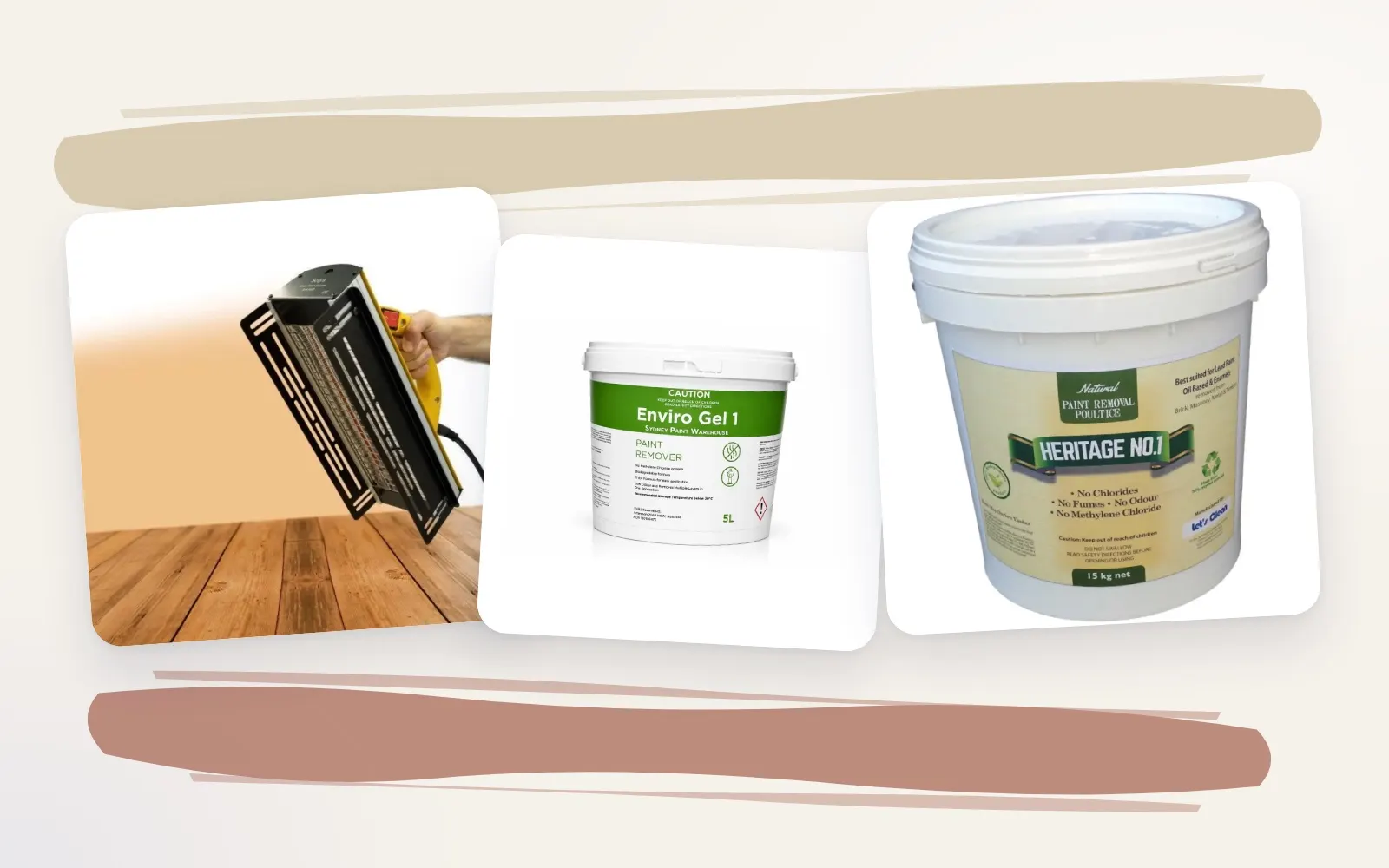
Infrared paint removers heat the paint and the timber gently from a distance, so the paint softens and lifts off with a scraper in one go. The Silent Paint Remover Speed Heater works at a much lower temperature than a heat gun: it does not release lead fumes from the paint when used correctly, creates no dust, softens paint and putty together, and leaves dry waste that is easy to bag. It has a significantly lower fire risk than a heat gun and is gentle on old timber — ideal for windows, doors and thick varnish. You can paint straight after.
Method 3: Gel and paste strippers
Chemical strippers are the best option for detailed mouldings, many layers, or surfaces where heat is not practical. Older strippers relied on methylene chloride or other harsh solvents. The products below were chosen as safer alternatives:
- Enviro Gel — a soy-based gel made without methylene chloride. Low odour, non-caustic and biodegradable, it removes multiple layers of acrylics, enamels, urethanes and similar coatings in one application.
- Home Strip — a patented water-based paint and varnish remover (“science not solvents”), suitable for occupied homes, schools and hospitals.
- Lead Away — a natural, biodegradable stripper made for old lead paints, as well as enamels and alkyds, on timber, brick, sandstone and metal.
- Trade Strip X-Tex — for textured wall and ceiling coatings. Some textured coatings made before the mid-1980s may contain asbestos. X-Tex removes them without creating dust, but have the coating tested first and follow asbestos rules.
How to use a gel stripper
- Protect the surrounding area and wear gloves and eye protection.
- Apply a thick, even layer with an old brush — do not brush it out thin.
- Cover with plastic film if the instructions suggest it, to keep the gel working.
- Wait. Depending on the number of layers this can be minutes or many hours; test a small spot before scraping the whole area.
- Scrape off the softened paint, and use a brush or scourer in mouldings.
- Clean the timber as the product directs, and let it dry completely before painting.
Always follow the label for the specific product, and test on a small area first. Browse all paint strippers.
Which method should you use?
- Windows and putty: infrared heat.
- Doors, architraves and detailed mouldings: gel stripper, or infrared on flat areas.
- Weatherboards: scrape loose paint; infrared or a lead-safe stripper for areas back to bare timber.
- Furniture: water-based or soy-based gel stripper.
- Textured ceilings and walls: X-Tex, after an asbestos test.
After stripping
Bare, stripped timber is dry and thirsty. Feed it with raw linseed oil, seal knots with shellac and paint — see preparing timber for linseed oil paint.
Common questions
Is a heat gun safe on lead paint?
High temperatures can release lead fumes. If you must use a heat gun, use the lowest setting with an approved respirator. Infrared tools that work at lower temperatures are a safer choice.
Can I sand old paint off?
Not if it might contain lead. Dry sanding creates fine lead dust. Wet scraping and wet sanding are the safer options.
Do I need to neutralise timber after stripping?
Some strippers need rinsing or neutralising — check the product instructions. Timber should be clean, dry and pH-neutral before linseed oil paint.