One litre of Allbäck linseed oil paint covers around 15–20 m² per coat. That surprises most people, because a litre of modern paint usually covers far less. The difference is in how it is applied: linseed oil paint has no water or solvent to evaporate, so every drop stays on the surface, and it goes on in thin, fully covering coats of roughly 100 microns rather than being built up thickly.
Step 1: Measure the area
- Walls and weatherboards: width × height for each wall, then subtract large windows and doors.
- Doors: about 2 m² per side for a standard door, plus edges and frame.
- Windows: measure the whole frame and sashes as if they were solid; the glazing bars and edges take more paint than their size suggests, so this evens out.
- Fences, eaves and trim: length × width of each face that will be painted.
Add everything up for a total in square metres.
Step 2: Decide how many coats
- New or bare timber outdoors: at least three coats.
- Very exposed surfaces (west-facing walls, coastal sites, window sills): four coats.
- Indoors: two to three coats.
- Refreshing sound linseed oil paint: usually one coat after washing.
Each coat should cover fully when you look at it against the light. Variations in sheen are normal and even out over time.
Step 3: Do the sum
Area × number of coats ÷ coverage = litres. Use 15 m² per litre for rough, sawn, weathered or very absorbent timber, and 20 m² per litre for smooth, planed or previously painted surfaces.
Example: a weatherboard wall of 25 m², bare and weathered, three coats: 25 × 3 ÷ 15 = 5 litres. The same wall over sound old paint: 25 × 3 ÷ 20 = 3.75 litres.
The paint calculator on our home page does this for you and suggests the tins to order. Results are always approximate.
Step 4: Choose tin sizes
Allbäck linseed oil paint comes in 200 ml, 1 litre and 3 litre tins. The 200 ml size is ideal for testing a colour on site or for small jobs like a front door’s trim. For larger jobs the 3 litre tin is the most economical. Leftover paint keeps indefinitely in a sealed tin — even below freezing — so a little extra is never wasted. Remnants can be combined and used as a first coat.
Why thin coats matter
It is tempting to put on a thick coat to save time, but with linseed oil paint that backfires. Thick coats skin over, wrinkle and stay soft underneath for a long time. Work the paint into the surface in several directions with a stiff brush, then finish with long strokes. Thin coats dry in about 24 hours in good conditions and build a harder, longer-lasting finish — see linseed oil paint drying time.
Things that change the amount
- Bare, dried-out timber soaks up more. Oiling it first with raw linseed oil reduces how much paint is drawn in.
- Rough-sawn boards use noticeably more than planed boards.
- Spraying is possible (undiluted, high pressure, small nozzle) but loses some paint to overspray.
- Exterior work: remember to add 10–20% zinc oxide, which slightly increases the volume you mix.
Common questions
How far does a 3 litre tin go?
Around 45–60 m² for one coat, or roughly 15–20 m² with three coats.
Is linseed oil paint expensive?
The tin costs more than a basic acrylic, but because it covers more per litre and lasts 20–25 years before recoating, the cost per square metre over time is competitive. Compare the two in linseed oil paint vs acrylic.
Still not sure?
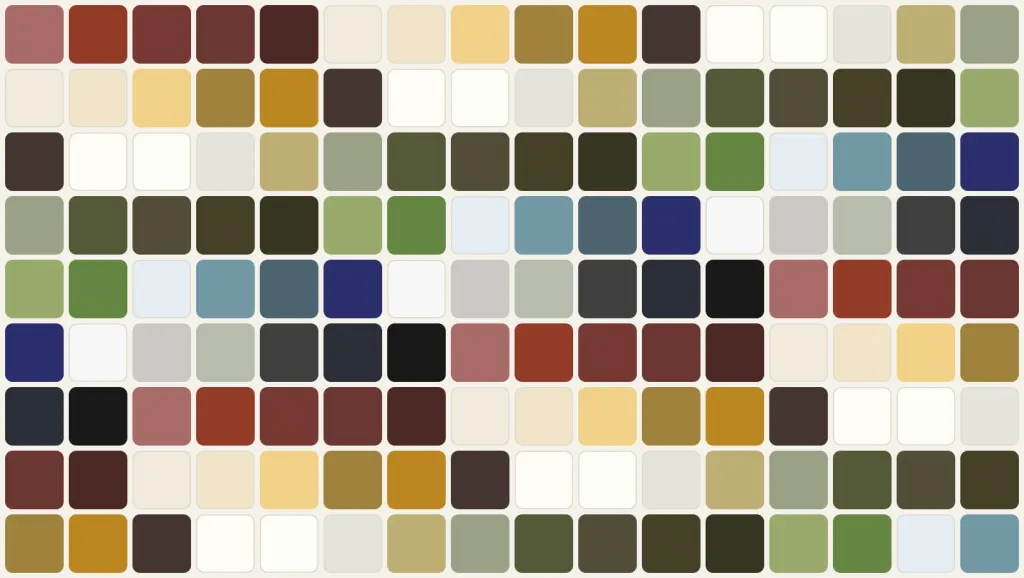
Tell us about the job — what you are painting, roughly how big it is and what is on it now — and we will help you order the right amount. Or browse the 32 colours.