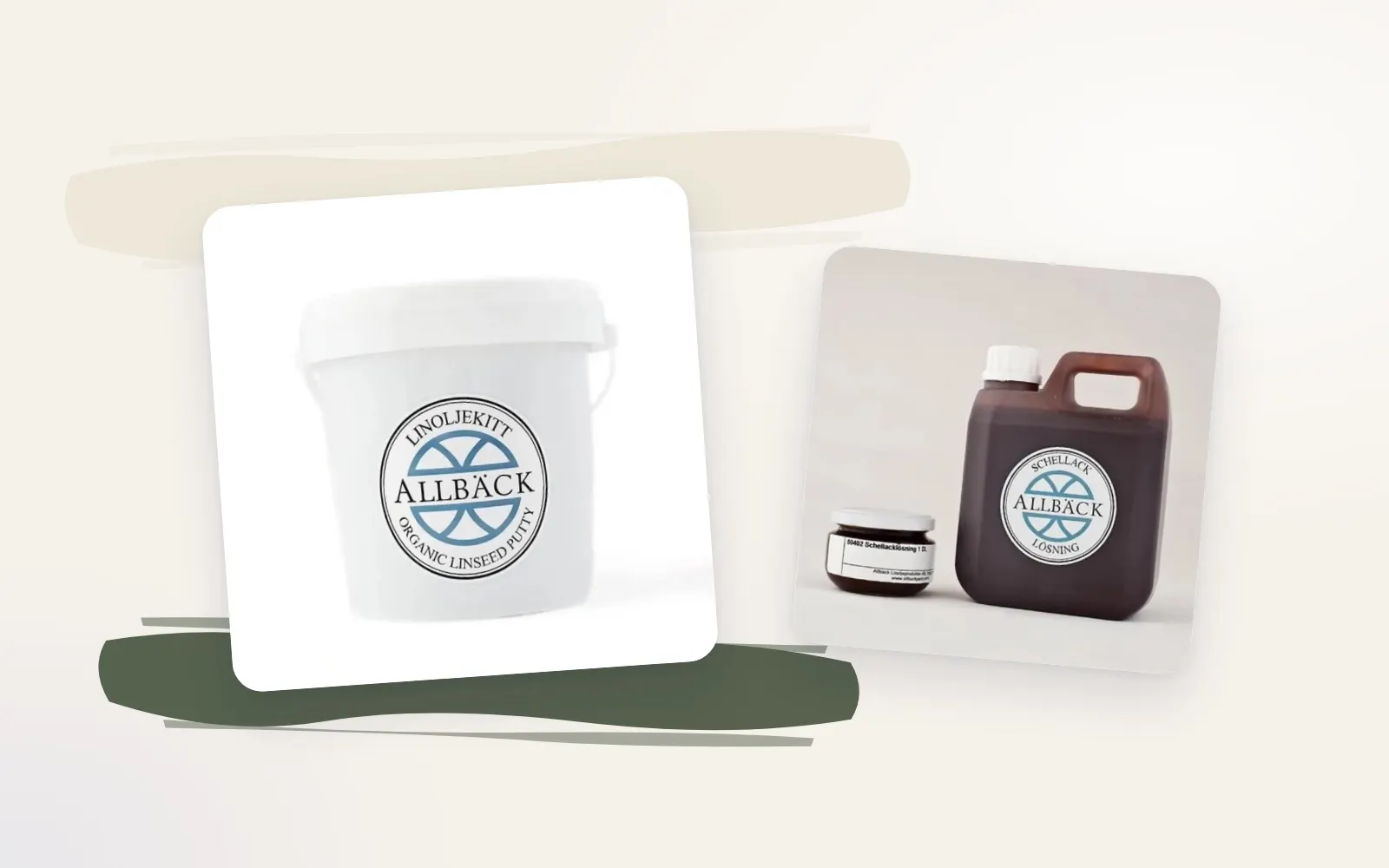
Cracked, missing or loose putty is one of the main ways water gets into an old timber window. Linseed oil putty is the traditional glazing compound: made from raw linseed oil and chalk, it stays slightly flexible, can be painted straight away and bonds with linseed oil paint. Done well, it lasts for decades.
What you need
1. Remove the old putty
Old putty is often rock hard. Soften it with gentle infrared heat rather than chiselling, which risks breaking the glass and splitting the rebate. Lift out the softened putty, remove the old glazing points and take out the glass if it is loose or cracked. On pre-1970 windows, assume the old paint contains lead — work wet, keep dust down and read removing old paint safely.
2. Clean the glass and the rebate
The edges of the glass must be free of dirt, paint and old putty, and the rebate scraped clean back to sound timber. Fill any cracks and let repairs dry.
3. Seal the rebate with shellac
This step makes the biggest difference to how long the putty lasts. Brush shellac into the rebate before glazing. It stops the dry timber drawing the oil out of the putty, which is what makes old putty shrink, crack and fall out. Shellac also keeps linseed oil away from the seals on double-glazed units.
4. Prepare the putty
- Remove any skin from the top of the tub, then empty out all of the putty and knead it until it is soft and even.
- It kneads more easily when warm — a few seconds in the microwave or a spell on a heater helps.
- Too sticky? Knead it on a piece of cardboard, or work in a little chalk. Too stiff? Warm it, or add a drop of raw linseed oil.
- Kneaded putty can sit on the bench for several days. Leftovers can be frozen.
5. Bed the glass
Press a thin layer of bedding putty into the rebate, then press the glass in gently and evenly so the putty squeezes out slightly at the back. Make sure the pane is properly supported and cannot move. Fix it with glazing points tapped into the frame.
6. Run the front putty
Roll the putty into a sausage, press it firmly along the rebate, then draw the putty knife along at an angle to form a neat bevel. The top of the bevel should sit just below the sight line, so it cannot be seen from inside. Clean off the excess at the back.
7. Clean the glass
Use a soft brush and a little pumice powder to remove oily smears from the glass.
8. Paint the putty
Allbäck putty can be painted immediately or the next day — there is no need to wait weeks, as with many other putties. Dust with a little chalk if it feels greasy. Paint at least three coats, taking each one about 2 cm onto the glass. When the paint is dry, wet the glass with weak soapy water and cut a straight line with a razor scraper, leaving about 2 mm of paint on the glass. The full process is in how to paint timber windows with linseed oil paint.
Using putty as a filler
Linseed oil putty also fills holes and dry cracks in timber, indoors and out, without shrinking. Mixed with a few drops of raw linseed oil, it becomes a brushable filler for cracked rebates and open corner joints — brush it in, wipe off the excess and paint straight away.
Common questions
How long does linseed oil putty take to set?
It forms a skin within days and hardens over weeks, but you do not need to wait — paint seals it, and it keeps curing underneath.
Why did my old putty crack and fall out?
Usually because the rebate was never sealed, so the timber drew the oil out, or because the putty was never painted. Shellac and three coats of paint solve both.
How long does a tub keep?
Up to a year at room temperature in a sealed tub, and longer in the freezer.