Timber weatherboards are part of what makes Australian houses look the way they do — from Federation cottages to Queenslanders. They also face a tough climate: strong UV, humidity, summer storms and, in many places, mould. Linseed oil paint suits weatherboards well because it soaks into the timber and wears away slowly instead of peeling. Here is how to do it properly.
When to paint
Paint when the air is at least 14 °C and the boards are dry — no more than 14% moisture content. In the southern states that usually means spring through autumn; in the tropics, pick the drier months. Start after the morning dew has burnt off and stop early enough that the last coat of the day can firm up before evening moisture. You can work in full sun with linseed oil paint.
1. Check for lead first
Most Australian houses built before 1970 were painted with lead paint at some stage. Do not dry-sand or use open flames on old paint. Our guide to stripping paint from timber covers safer methods, and NSW EPA’s LeadSmart has detailed advice for renovators.
2. Scrape back to a sound surface
Remove all loose and flaking paint. You do not need to take everything back to bare timber — sound old oil-based paint is a good base for linseed oil paint. Over sound acrylic, try a test patch first.
3. Wash off dirt and mildew
This matters more in Australia than almost anywhere. Mildew spores are everywhere in humid weather, and paint over them fails early. Wash the boards with Linseed Soap Extra, which is made for mildew: apply it, let it soak in long enough to loosen the growth, scrub, then rinse with low-pressure water. Avoid high-pressure washers — they force water into the timber and raise the grain. Let the boards dry completely.
4. Oil the dry, bare timber
Weathered bare boards are thirsty. Brush on raw linseed oil and let it soak in fully before painting, wiping off any excess. Warm oil penetrates faster. This stops the paint being drawn into the wood and helps it go on evenly.
5. Prime knots and end grain
Seal knots with shellac to stop resin bleeding through. Give the bottom edges and end grain of the boards extra attention — that is where water sits.
6. Paint three coats
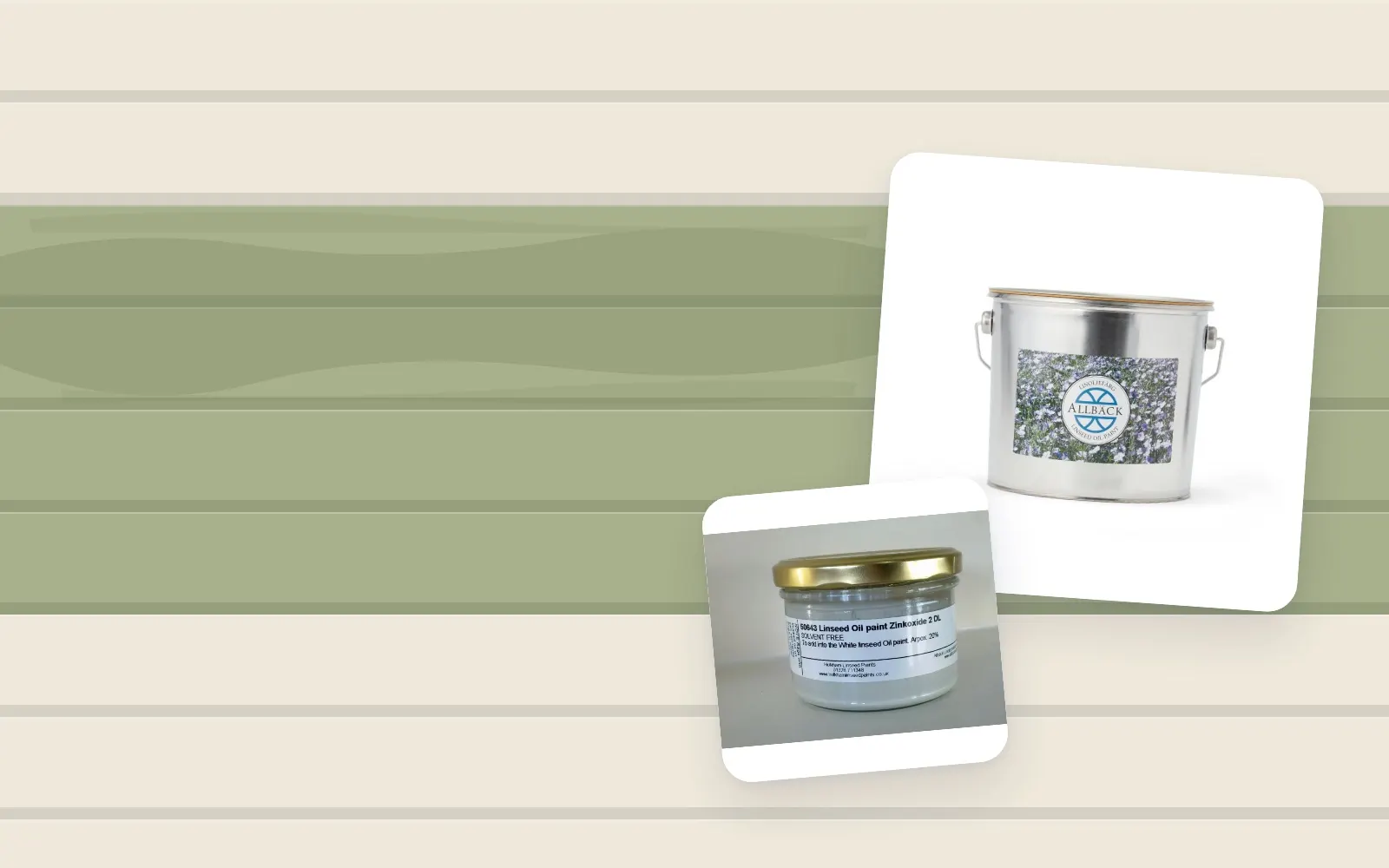
- Add 10–20% zinc oxide to the paint for exterior work. It makes the paint more resistant to mould and helps it dry harder.
- Apply at least three thin, fully covering coats — four on walls facing the weather. Allow about 24 hours between coats.
- Work the paint into the timber in several directions, then finish with long strokes along the board.
- Paint the underside edge of each board as you go.
- One litre covers around 15–20 m² per coat. Measure the walls and check the paint quantity guide.
7. Choose a colour that suits the house
Allbäck’s 32 colours come from mineral pigments — the ochres, greens, reds and off-whites seen on historic timber houses. Popular weatherboard choices include Old White, Parchment, Barley White, Wild Sage and Old Red. See all the colours, or read about mixing your own shade.
Maintenance instead of repainting
Linseed oil paint slowly loses its sheen and then chalks on the surface. Expect some of that chalky pigment to wash down onto surfaces below in heavy rain in the first years. When the boards look dry and matte, wash them with linseed soap and wipe on boiled linseed oil, or add one more coat of paint. No strip-back is needed. More in looking after linseed oil paint.
Common questions
Can I spray linseed oil paint onto weatherboards?
Yes, undiluted, with a high-pressure sprayer and a small nozzle. Back-brushing into the timber still gives the best result on bare wood.
Will it peel like my old paint?
Linseed oil paint is anchored in the timber and stays open to moisture, so it does not form a skin that lifts off. It wears gradually instead.
Is it suitable for heritage homes?
It is the traditional finish for timber houses — see why heritage buildings are painted with linseed oil.