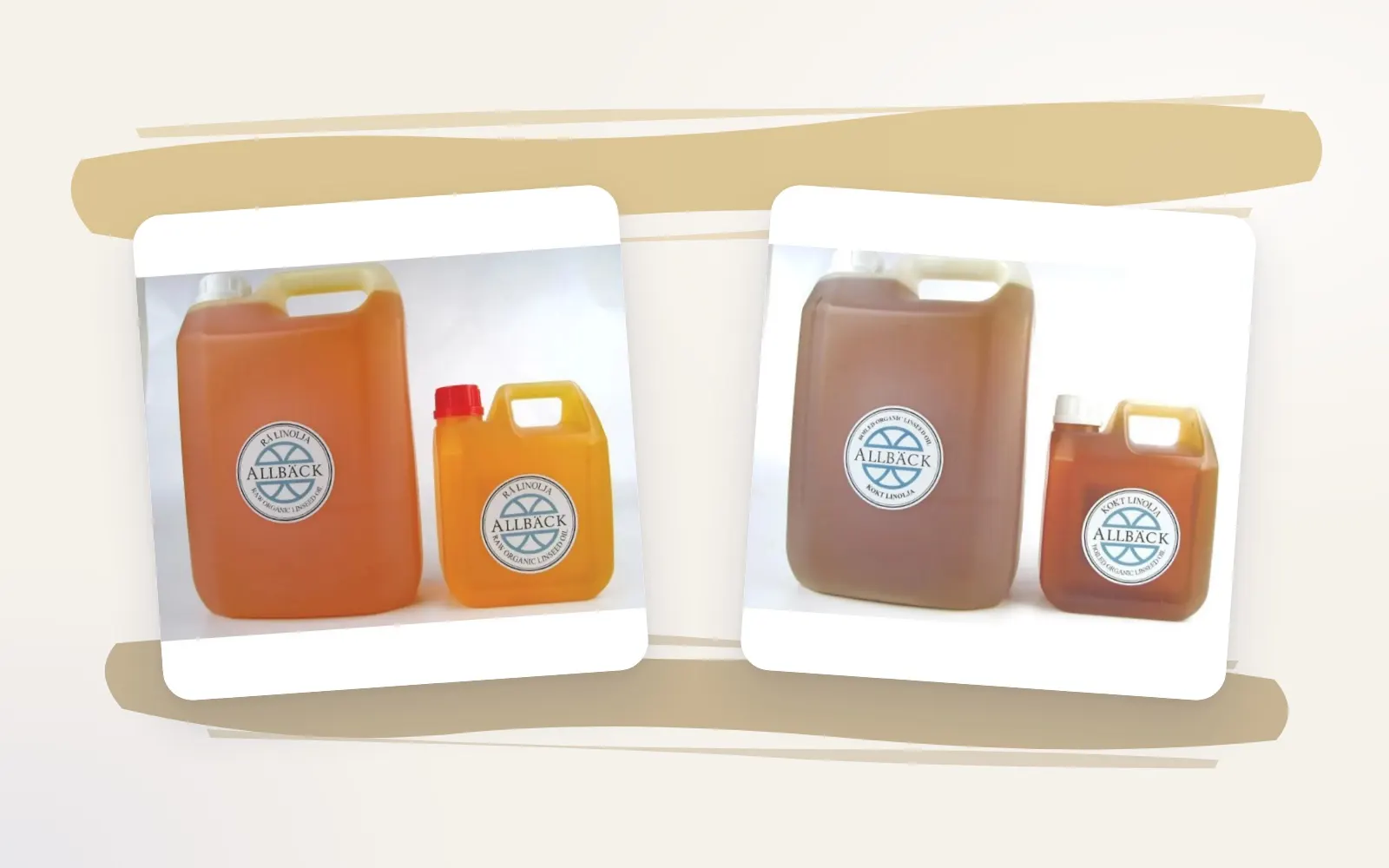
“Linseed oil” on a label can mean several different products, and using the wrong one is one of the most common reasons a job ends up sticky or blotchy. The short version: raw linseed oil is for feeding the wood, boiled linseed oil is for finishing it. Here is what that means in practice.
What is raw linseed oil?
Raw linseed oil is pressed from flax seed and, in Allbäck’s case, purified to remove protein and impurities — an old process from the 18th century. Its molecules are small, so it penetrates deeply into dry timber and protects it from moisture and rot. The catch is that raw oil dries very slowly. It must be absorbed by the timber, not left sitting on the surface.
Use raw linseed oil for:
- Impregnating dry, weathered timber outdoors before painting — the paint is then not drawn into the wood.
- Feeding cracks and end grain.
- Making putty and soap (Allbäck’s own linseed oil putty and soap are made from it).
- Storing natural-bristle brushes long term — hang them in a container of raw oil.
Do not add raw linseed oil to paint. It will slow drying right down.
What is boiled linseed oil?
Boiled linseed oil has been heated and oxidised so that it dries and forms a surface finish, usually in about 24 hours. Allbäck’s boiled oil is the same oil the paint is made from. Many hardware-store “boiled” oils are raw oil with added driers and often solvents — check the label, because solvent-based oils do not belong in solvent-free linseed oil paint.
Use boiled linseed oil for:
- A finish on bare, unpainted timber.
- Thinning linseed oil paint — no more than 5%.
- A base coat that stops the first coat of paint looking blotchy.
- Maintenance: when a linseed-painted surface turns matte and chalky, wash it and wipe on warm boiled oil to bring the sheen back.
- Making a stain — stir a little linseed oil paint into boiled oil, and add more paint for a darker tone.
Raw or boiled: a quick guide
- Dried-out exterior timber before painting: raw oil, allowed to soak in fully. Warming the oil, or letting the sun warm the timber, helps it penetrate.
- Previously painted timber, or timber treated with a petroleum-based preservative: boiled oil.
- Clear finish on furniture or joinery: boiled oil, or linseed oil wax for a silkier, water-repellent finish.
- Thinning or reviving paint: boiled oil.
- Brush storage: raw oil long term, boiled oil short term.
How much to apply
Less than you think. Brush or rag on a thin coat, let it soak in for 15–20 minutes, then wipe off everything the timber has not absorbed. Oil left on the surface stays tacky for a long time and attracts dirt.
A safety note you should not skip
Rags and paper soaked in linseed oil can self-heat and catch fire as the oil oxidises. Put used rags in a bucket of water, or spread them flat outdoors to dry, before you throw them away.
Common questions
Will raw linseed oil ever dry?
Slowly — it can take weeks on the surface. That is why it is used to soak into the timber, with the excess wiped off, rather than as a finish.
Can I use boiled linseed oil instead of paint outdoors?
It will protect the timber for a while, but it has no pigment to shield the wood from UV and needs reapplying far more often. Linseed oil paint gives the same breathable protection with much longer intervals.
What about linseed oil putty and soap?
Both are made from raw linseed oil. See how to reglaze a window with linseed oil putty, or browse all Allbäck linseed oil products.